
AI model video for
accessories.
The question every accessory shopper asks is how big it actually is. Dimensions in centimetres do not answer it, and a photograph on a plain board answers it worse. An accessory only makes sense against a body, which is the one thing your product photography probably does not have.
Scale answered on a body We say which items are too small
What question does accessory video actually answer?
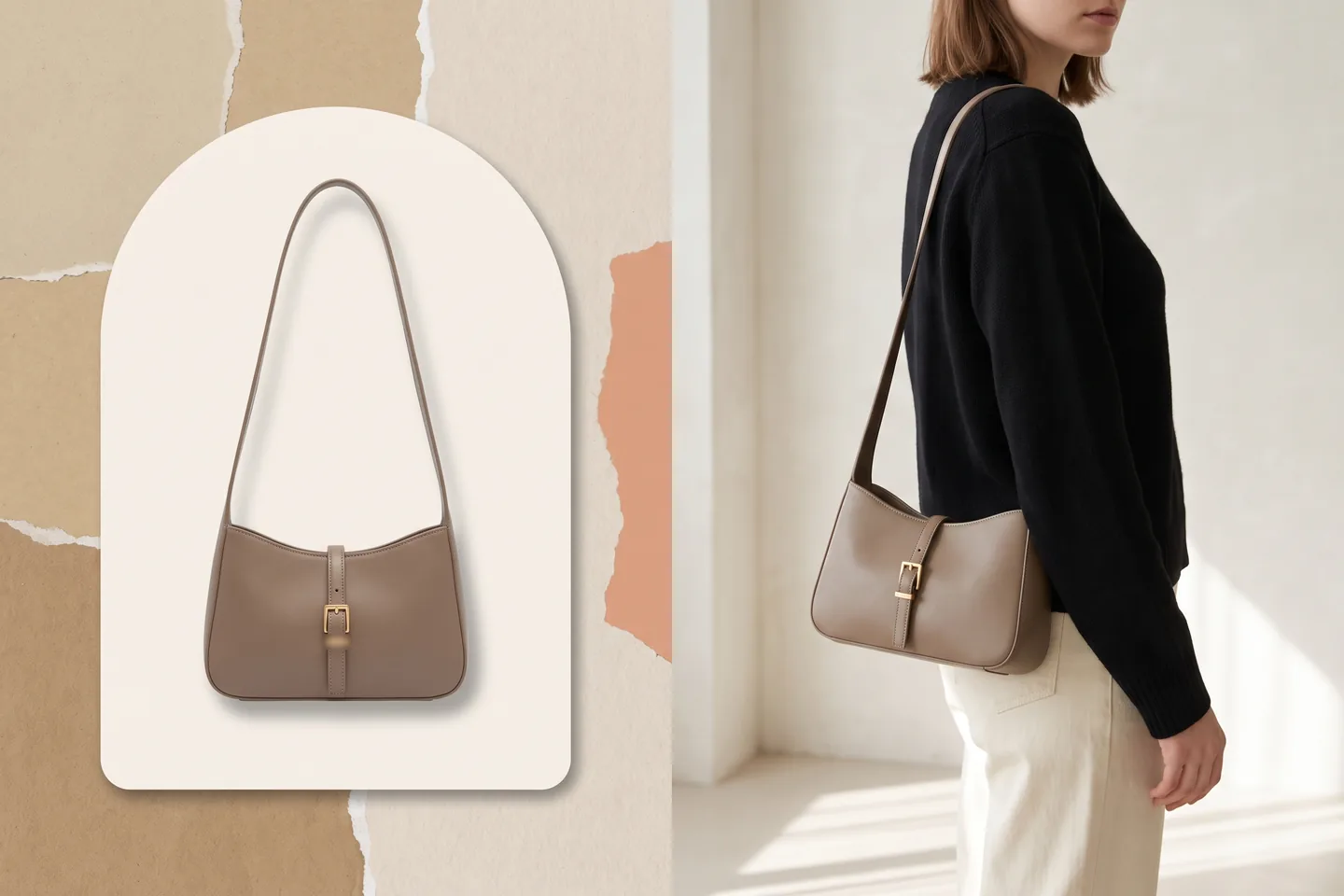
Scale. "32cm x 24cm" is a number almost nobody can picture, and the tote that looked generous on a white background arrives the size of a book. Put the same bag on a shoulder and the question is settled in a second, with no measurements and no returns conversation. Scale is the single largest source of accessory returns and the single easiest thing to fix.
The second thing it answers is how the item sits. Where a crossbody strap actually falls, how a scarf drapes rather than how it folds, whether a hat's brim is as wide as it looked. These are all relationships between the item and a body, so they are invisible in every photograph taken without one.
Which accessories work best here?
Anything where on-body scale is the buying question. Bags of every kind, hats, scarves, belts and larger jewellery. Bags are the strongest case in the whole category, because bag returns are so often about size rather than about quality, and a single on-model still resolves the ambiguity before the order is placed.
Scarves and anything soft benefit from video specifically rather than stills, because the drape is the product and drape only reads in motion. For those, spending 3 credits on a five second clip after approving the still is worth more than it is for a rigid item like a structured handbag.
Which accessories does this struggle with?
Fine jewellery, and it is worth being direct about this rather than letting you find out. Rings, thin chains, stud earrings and delicate engraved detail sit below the scale where 1080p output and generative rendering hold up. The item will appear, but the detail will be approximated, and for jewellery the detail is what the customer is buying.
The honest guidance is a threshold rather than a rule: if the item is smaller than a palm and its detail is the selling point, keep your macro photography and use generation for context rather than for the hero shot. Statement pieces, chunky chains and large earrings are usually fine. A solitaire ring is not, and we would rather say so than take the credit.
What should the source photo show?
The whole item including the parts that connect it to a body. For a bag that means the strap or handle fully visible and extended rather than tucked, because strap length determines where the bag lands, and a tucked strap gets invented. For a hat it means the full brim and crown. For a scarf, the piece opened out enough that its size is readable.
A plain background and even lighting, as everywhere else, and no hand or prop in frame holding the item. Hardware is worth photographing clearly: clasps, buckles and chain links are the details most likely to be approximated, so give the generation as much to work from as you can.
How does an accessory video earn its place on the page?
By sitting next to the flat product shots rather than replacing them. Accessory customers want both: the clean object photograph for detail and colour, and one on-body render for scale. The pairing does more than either alone, and it costs one still at 1 credit to add the half you are missing.
The same generation exports at 9:16, 1:1 and 16:9, so the clip that answers the scale question on the product page is also the one you post, without a second charge. Vertical output for social is covered in vertical clips for social, and the still stage that comes first is on the still stage.
What does one accessory cost to render?
One credit for the try-on still, three more for a five second video, six for a ten second one. So the minimum useful thing, a single on-body still that answers the scale question, costs 1 credit, and the free plan's ten credits a month is ten of those or three finished videos. Failed generations are refunded automatically.
For a bag range, stills alone are often the right spend: ten bags photographed on a shoulder for 10 credits answers more customer questions than two polished videos would. Output is 1080p with no 2K or 4K on any plan. How the two stages fit together is on AI model video, end to end.
About accessories.
Does it work for fine jewellery?
Not well, and we would rather say so. Rings, thin chains and stud earrings are below the scale at which 1080p output and generative detail stay faithful, so the piece will be approximated rather than reproduced. Larger statement jewellery is usually fine. For small pieces, keep your macro photography as the hero and use an on-body render only for context.
How do I show a bag's real size?
Generate an on-body still and put it next to your existing product shots. Scale is the thing dimensions fail to communicate, and a single render against a body settles it. Make sure your source photo shows the strap or handle fully extended rather than tucked, because strap length is what determines where the bag actually lands.
Should accessories get stills or video?
Stills for rigid items, video for soft ones. A structured handbag is fully described by a good on-body still at 1 credit, so spending 3 credits animating it adds little. A scarf, a soft tote or anything that drapes is different, because the movement is the product and a still cannot show it.
Will clasps, buckles and hardware render correctly?
Approximately. Hardware is small, reflective and detailed, which is the combination generative rendering handles least well, so treat it as indicative rather than exact. Photograph it clearly in your source image to give the generation the best chance, and keep a real close-up in the gallery if a particular clasp or buckle is a selling point.
Can I show a hat or scarf without a full-body model?
The render is built on a model from the gallery, so a body is always involved, but framing follows the item: a hat renders as a head-and-shoulders composition rather than a full-length shot. That is usually what you want for headwear, because the scale reference that matters is the head rather than the whole figure.
Answer the size question once.
Ten credits a month, which is ten on-body try-on stills or three finished videos. Enough to put your whole bag range on a shoulder and see whether the size questions stop.